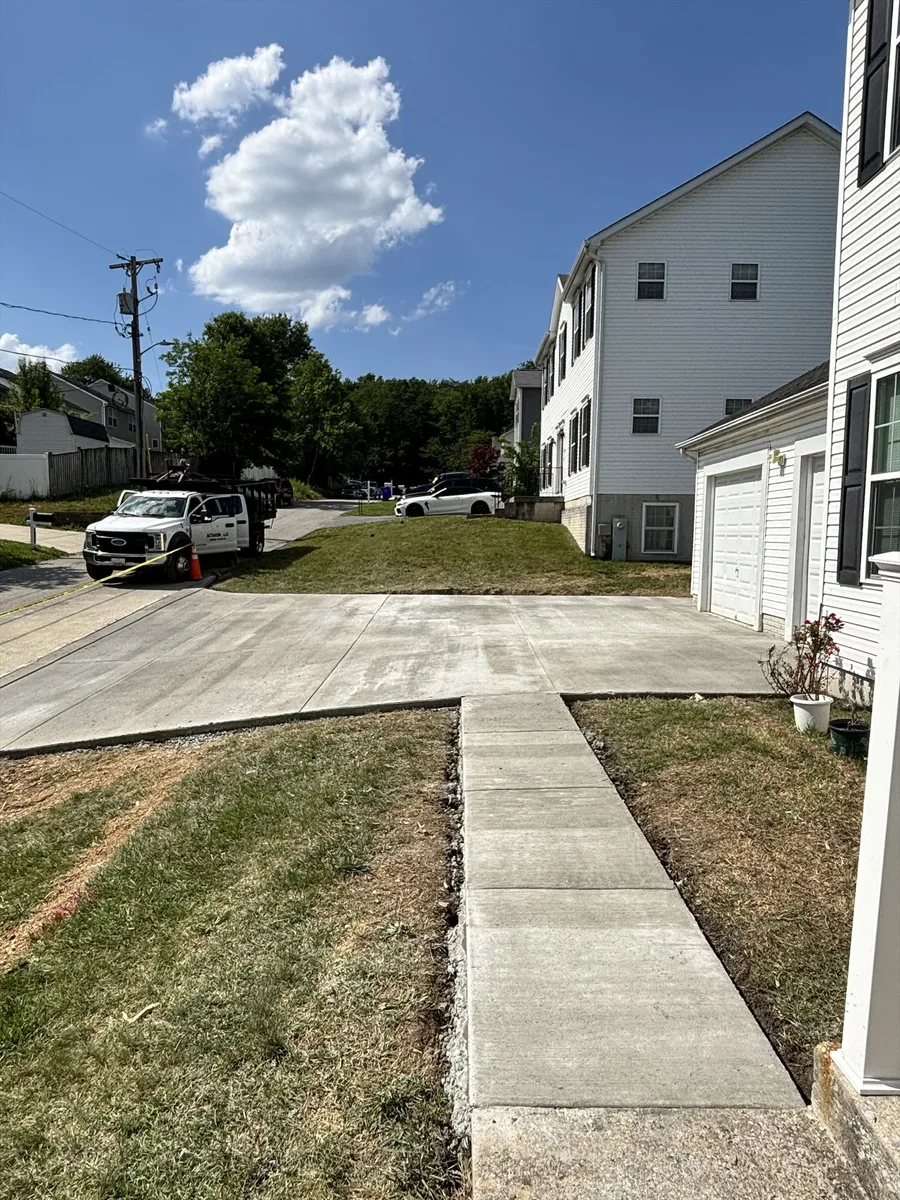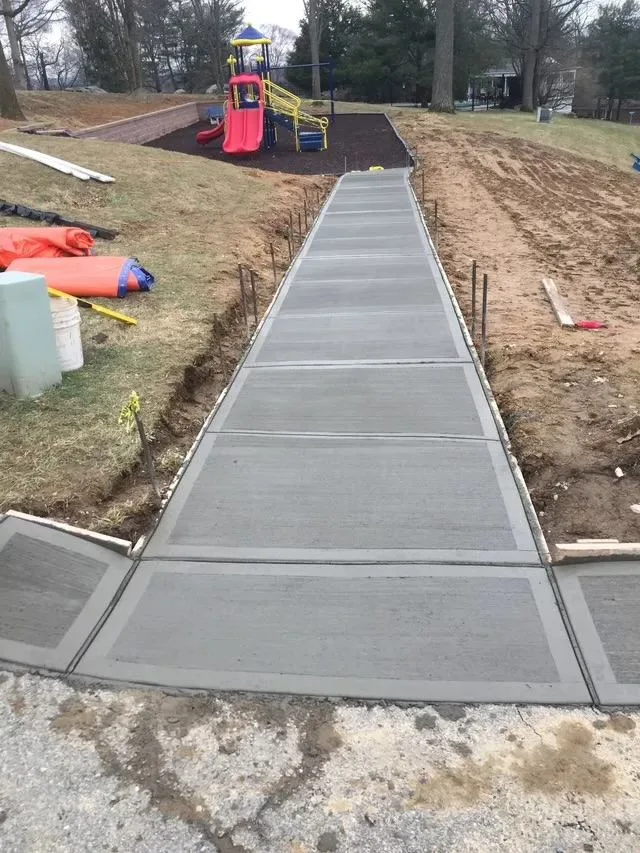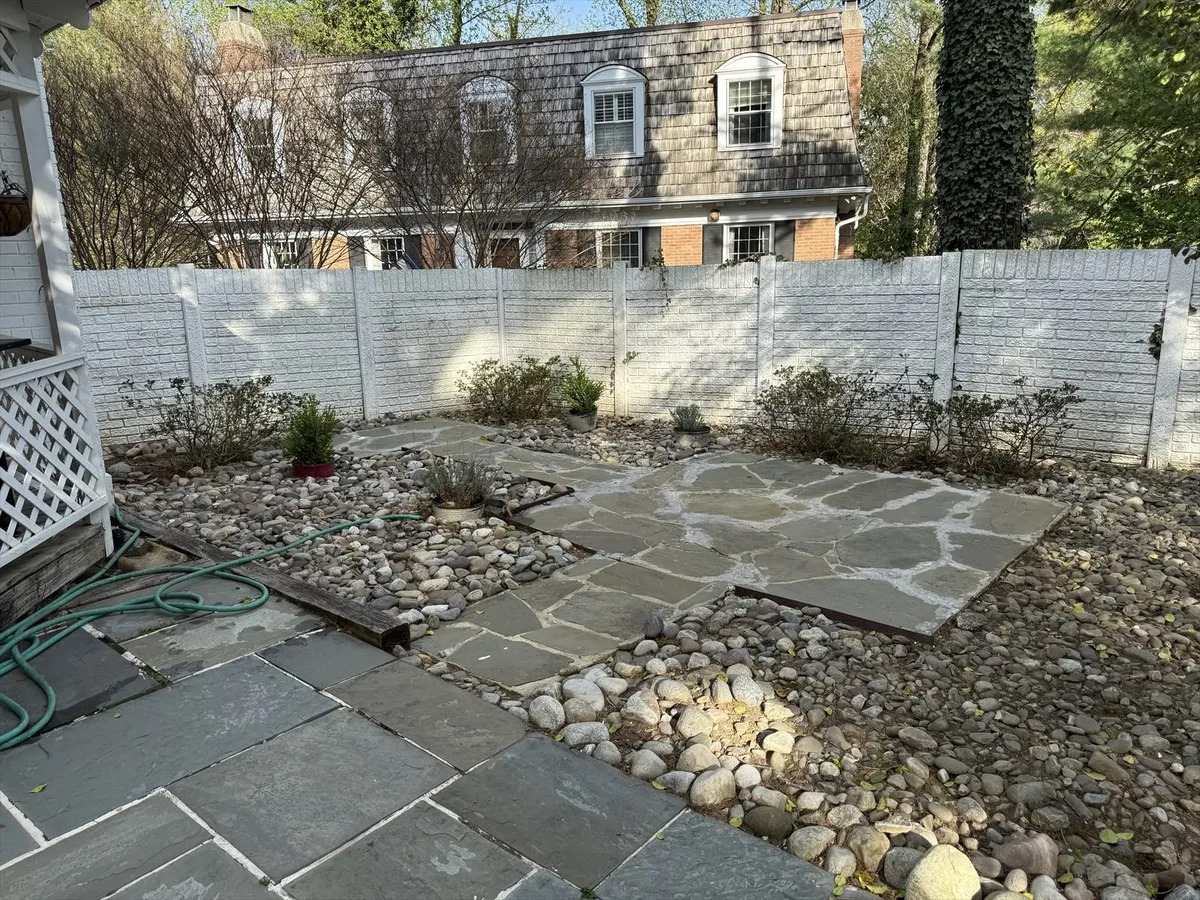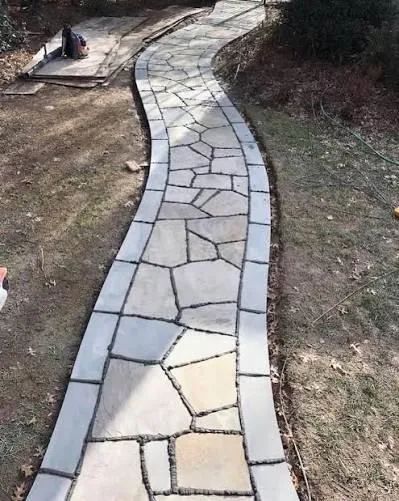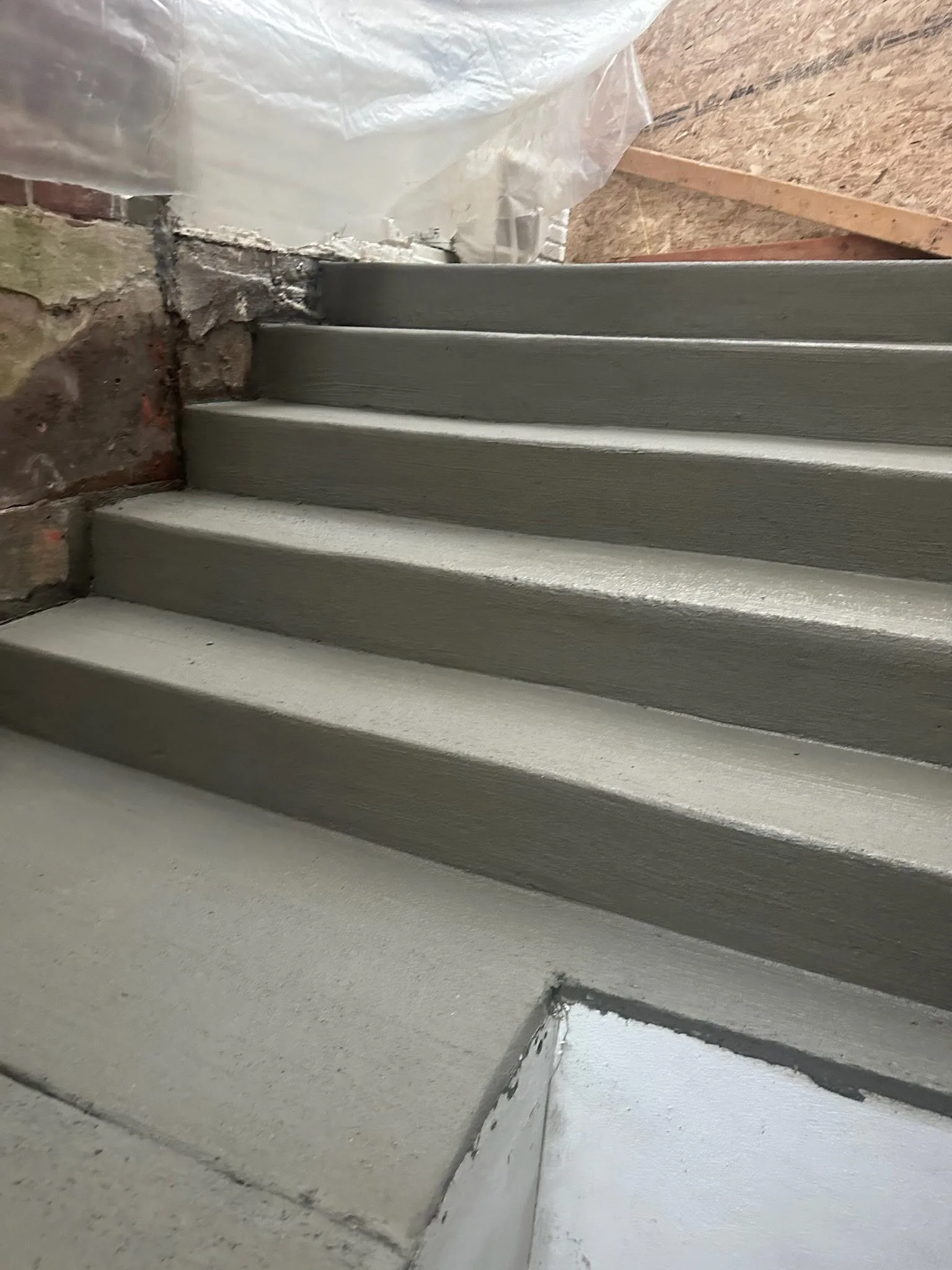
Concrete masonry at Actaeon covers retaining walls, flatwork, poured slabs, stamped concrete, block construction, and decorative masonry features — built for residential and commercial clients in Washington DC, Maryland, and Virginia. We use air-entrained concrete mixes and proper expansion joints to handle the DMV's freeze-thaw cycles and expansive clay soils.
Concrete and masonry are unforgiving. Everything you skip at the base shows up at the surface within two years. We don't skip.
What concrete masonry covers at Actaeon
Concrete masonry is the umbrella term for our work in poured concrete, block, brick, natural stone, and paver systems. It includes everything from a 12-foot front walkway to a 50-foot segmental retaining wall to a 1,000 square foot stamped concrete pool deck. The techniques and materials change — the underlying standard doesn't. Proper base, proper compaction, proper drainage, proper expansion control, proper finish.
What we do
- Patios. Poured concrete, stamped, pavers, and natural stone.
- Retaining walls. Segmental block systems, natural stone, poured concrete. Engineered when over 4 feet.
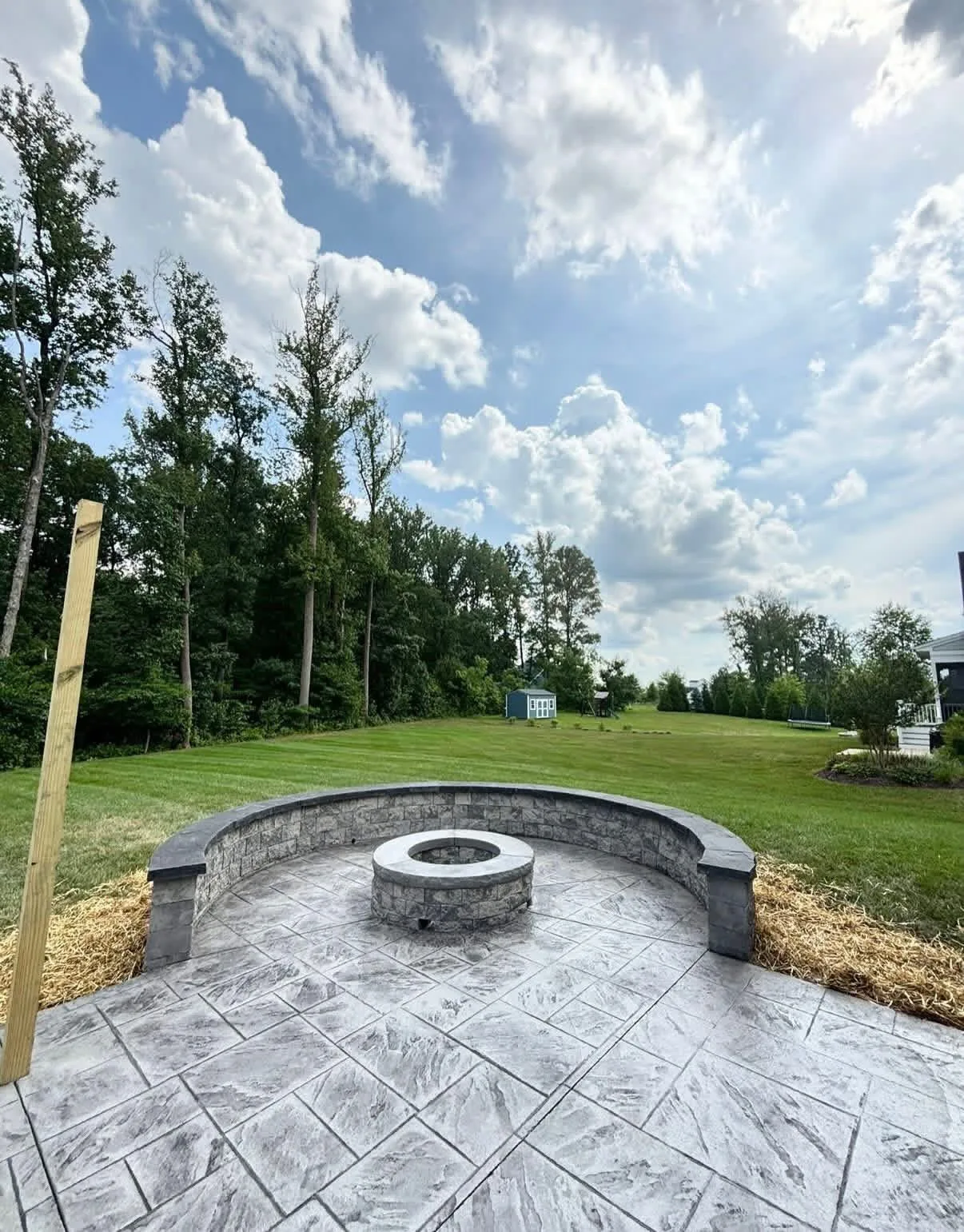
- Stamped concrete. Patterned, colored concrete for patios, walkways, and pool decks.
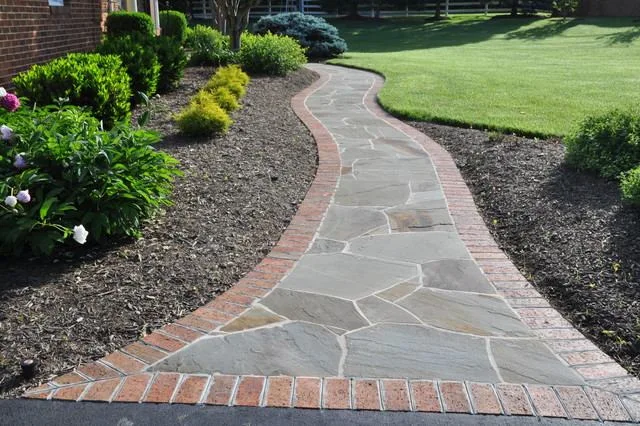
- Walkways and driveways. Poured concrete, stamped, or paver.
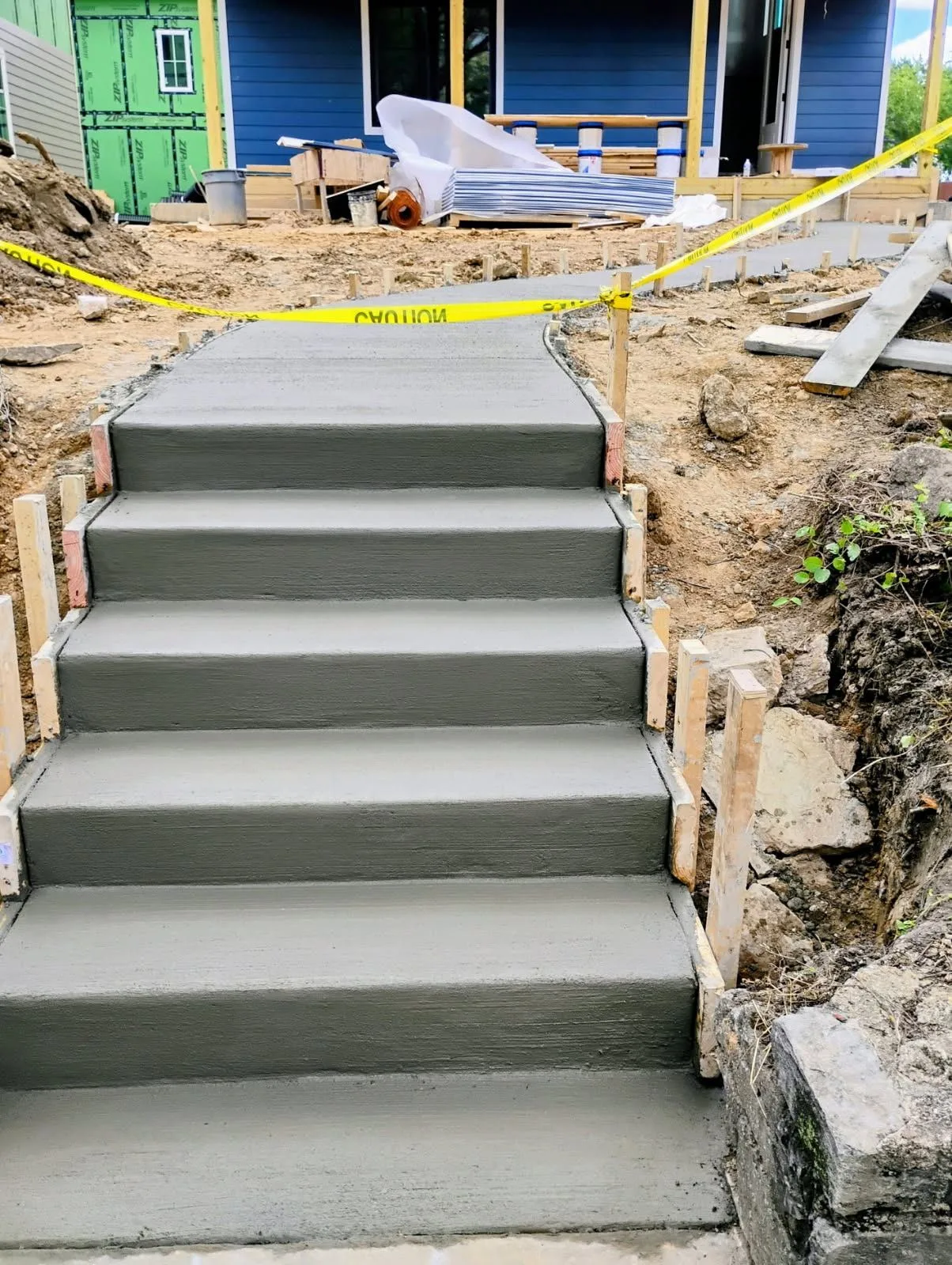
- Steps and landings. Indoor-to-outdoor transitions built to match the home.
- Seat walls, columns, and piers. Decorative and functional masonry integrated into larger projects.
- Repair and restoration. Crack repair, resurfacing, rebuilding failed walls, underpinning.
Stamped concrete — pattern, color, and texture
Stamped concrete combines the economics of poured concrete with the visual range of stone or brick. Pattern and color are applied while the concrete is still workable — texturing mats pressed into the surface create the appearance of slate, flagstone, cobble, or wood plank. Color comes from integral pigment in the mix, surface-applied color hardener, or both. The result is a monolithic slab that holds up well — provided the base is right and the sealer is maintained. In the DMV, stamped concrete needs a penetrating sealer rated for freeze-thaw exposure; topcoat-only sealers can peel after a hard winter. We cut expansion joints in the same locations you'd use them in plain concrete — stamped work cracks the same way if you skip them.
Concrete curbing and edging
Concrete curbing creates a clean edge between paved surfaces and planted areas, prevents base material from migrating outward, and gives driveways and walks a finished border that holds its line over time. Ask about curbing and edging as part of your project when you contact us.
Flatwork — slabs, pads, and poured surfaces
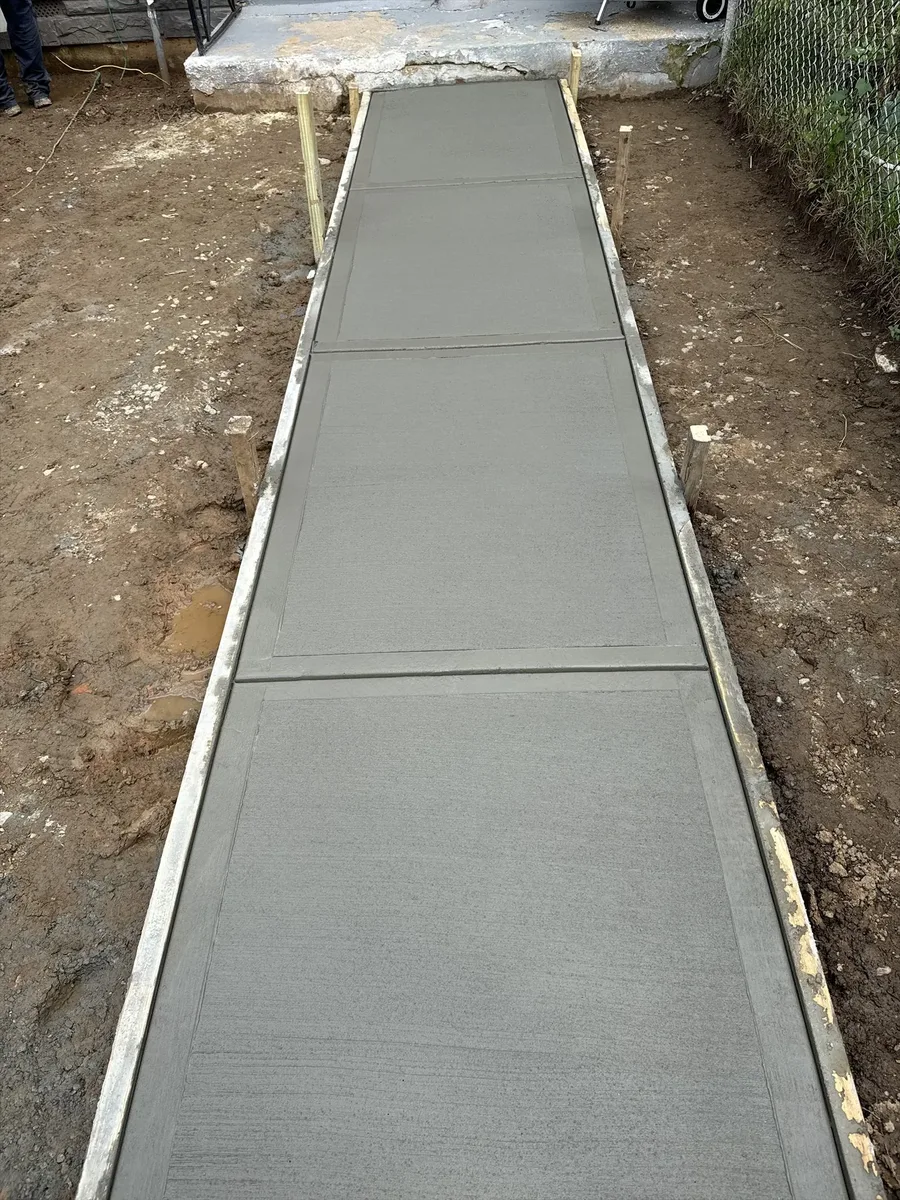
Flatwork is horizontal poured concrete: sidewalks, equipment pads, garage aprons, pool decks, poured patios, and utility slabs. It's also where quality varies most from contractor to contractor. The difference between flatwork that stays flat and flatwork that heaves, cracks, and settles into a trip hazard is almost entirely in what happens before the pour — excavation depth, removal of organic material, graded base stone compacted in lifts, and control joint placement. For exterior flatwork in the DMV, we use air-entrained concrete rated for freeze-thaw exposure. Broom finish is standard for exterior walks and driveways; smooth trowel finish for covered or interior-adjacent slabs where slip resistance isn't the priority.
Concrete and masonry repair
Concrete and masonry repair ranges from surface crack injection to full-section demolition and replacement. The diagnosis drives the scope: a surface crack from shrinkage is different from a structural crack from settlement, which is different from a section heaved by tree roots or frost. Patching without addressing the underlying cause produces a patch that fails in the same place. We assess the cause first — base failure, drainage problem, root intrusion, frost heave — and address it as part of the repair, or give you an honest assessment of what the repair can and can't fix. For block walls, that often means rebuilding the failed section with corrected drainage behind it. For flatwork, it often means removing the slab, re-grading the base, and pouring new concrete rather than patching over the problem.
The base is everything
The visible part of any concrete or masonry project is a fraction of the work. Most of the labor — and most of the difference between a 5-year job and a 30-year job — is underground. Excavation to the right depth. Removal of organic and expansive material. Graded base stone compacted in lifts. Proper edge restraint. Drainage below and behind every wall. Expansion joints cut before the concrete cracks on its own terms instead of yours.
You can see the surface finish of any concrete job from the sidewalk. You can't see the base — but the base is what determines whether that surface is still level in five years or cracked and heaving.
Why the DMV climate is hard on masonry
Freeze-thaw cycles. Clay-heavy soils that expand when wet and shrink when dry. Summer heat that stresses curing concrete. Salt damage from winter deicing on anything that's not sealed. Our installation spec accounts for all of it: air-entrained concrete mix, sealers rated for freeze-thaw exposure, proper expansion joints, and drainage to prevent water from sitting in the wrong places.